
Inside the Legal Battles of Larry King and Prince’s Estates
Former legendary talk show host Larry King died last month at 87 years. At first glance, he might not appear to have much in common with pop star Prince, who died in 2016...

Former legendary talk show host Larry King died last month at 87 years. At first glance, he might not appear to have much in common with pop star Prince, who died in 2016...

In 1971, President Richard Nixon supposedly told an ABC News reporter that he was "now a Keynesian in economics." This statement was an acknowledgment that he agreed with the ideas put forward by British economist John Maynard Keynes. In his 1936 book The General Theory of Employment, Interest, and Money, Keynes recommended higher government spending and tax cuts to stimulate demand, aiming to pull the global economy out of the Great Depression.

Only a decade ago, cryptocurrencies, also known as "cryptos," were virtually unknown. Since the invention of the first crypto (Bitcoin) in 2008, thousands more cryptos have been developed. But Bitcoin, the original crypto, remains by far the most popular in today’s market and continues to set price records.

Offshore investments often carry a negative connotation, but the reality is far more nuanced. Contrary to popular belief, most offshore activities are entirely legal and serve legitimate purposes. Media coverage tends to sensationalize the idea of offshore investments as synonymous with corruption. The truth is that these financial arrangements are often practical, necessary, and above all, legal.

Imagine a world where scarcity is no longer a concern, where homes can be printed in a day, and diseases are eradicated before they can spread. This may sound like the stuff of science fiction, but these are just some of the innovations on the horizon that are changing our world for the better.

It’s no surprise that Big Brother takes an intense interest in how we interact with our mobile devices.

The COVID-19 pandemic has irrevocably altered the fabric of American society. It has reshaped everything from our urban landscapes to how we work and play.

Heads, Big Brother wins. Tails, you lose. That’s the no-win dilemma US citizens who live overseas face when it comes to using a US passport...

You might call it the “curse of good intentions”: an action we take upon ourselves or require others to take in the expectation it will improve things for us as individuals or for society.

An economic truth I revisit periodically is that every fiat currency (a medium of exchange without intrinsic value or backing by a commodity with intrinsic value, such as gold) will eventually become worthless.

In today’s world, government surveillance has become more pervasive and invasive than ever before. Over the years, government surveillance expansion has progressed from basic data collection to more advanced technologies. Today, sophisticated monitoring systems can track our every move.

The global economy is on the brink. Unemployment is soaring, and businesses across the country are closing. Even large-scale government relief won’t be enough to stop the economic fallout.

As the COVID-19 pandemic wreaks havoc on the global economy, Congress is preparing a $1 trillion bailout package. But will this solve the problem or simply fuel the next corporate crisis?
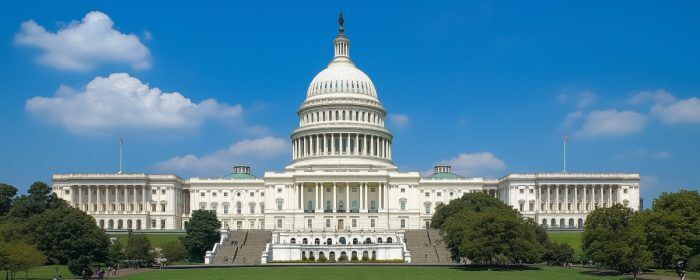
Do you remember the first time you realized that the government was lying to you?

A decade or so ago, a client I’ll call Will hired me to give him a list of tactics to prepare for an unforeseen natural or man-made disaster. I presented my research to him when we met a few weeks later.

The island of Nevis covers just 36 square miles, has 12,000 full-time residents, several hundred hotel rooms, and a tiny airport.

Our planet’s climate has been changing for billions of years. It will continue to do so for billions more. Eventually, the sun will become a "Red Giant," consuming the inner planets in the solar system, including Earth.
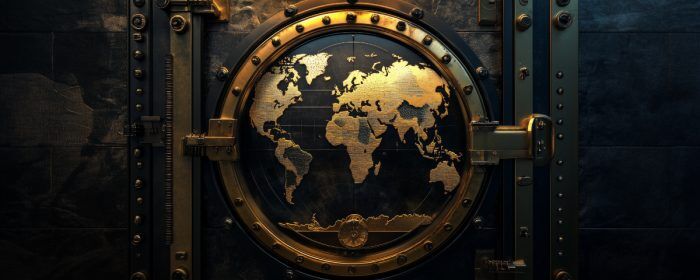
The world is smaller than ever, and the opportunities to internationalize your finances are right at your doorstep. In just a few hours flight from the US, you could be securing your assets in Europe’s safest vaults or earning higher interest rates in Panama.

In August 2018, an astonishing $17 trillion in global debt had negative yields. About 30% of investment-grade bonds had yields below zero. If you bought these bonds and held them to maturity, you were guaranteed to lose money.
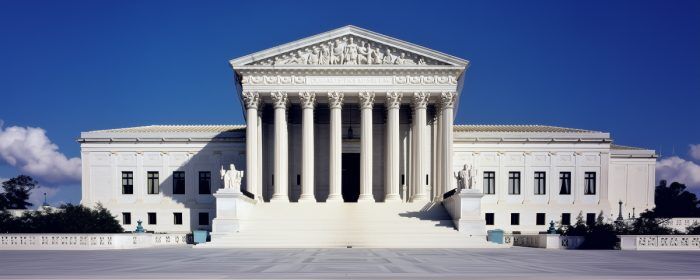
In February 2019, the Supreme Court unanimously ruled that the Eighth Amendment prohibition against "excessive fines and fees” applies to civil forfeiture cases and other civil, non-criminal proceedings.

Did you know Hollywood star Nicholas Cage played Lois Lane in a Superman movie? Or that Facebook founder Mark Zuckerberg once boasted that the social media giant has “total control of billions of people’s stolen data?”

Given shifting attitudes, it’s harder to publicly argue in favor of offshore investing than it once was.

A fundamental injustice of US tax law is that it discriminates against the approximately nine million Americans who live in other countries.

The Financial Action Task Force on Money Laundering (FATF) is perhaps the most important organization you’ve never heard of. The G-7, which is essentially a club for the world's wealthiest nations, set up the FATF in 1989.

Italy is an amazing country with a long history, outstanding food, great wines, and unsurpassed culture. But it’s facing an economic and political crisis that will lead to a global financial collapse.

It’s here, or at least nearly here. “It,” in this case, is another recession. We can debate the causes – an escalating trade war between the US and China, too much dodgy debt, the end of the longest bull market in history, or perhaps all three.

The tax-and-spenders of the world are desperate to find new ways to pay for the crumbling welfare states of western democracies. And they’re targeting the “rich” to do it.

I sleep better at night knowing that ever-vigilant defense contractors and the politicians they’ve bought and paid for are making certain that America won’t be overrun by Communists, Islamic terrorists, or anyone else.

In the last few years, banks have been falling over themselves to get rid of “undesirable” customers. Basically, if your bank isn’t making enough profit servicing your account, it will close it.

Let’s face it, many forces are pushing for the abolition of – or at least serious restrictions on – cash.