
Mexico Passport Scam Exposed
The newest passport scam that has come to my attention recently is for Mexico. The Mexico "program," as the company offering this scheme calls it, can be completed in four months and with only two visits to the country.

The newest passport scam that has come to my attention recently is for Mexico. The Mexico "program," as the company offering this scheme calls it, can be completed in four months and with only two visits to the country.

Pop icon Tina Turner has just joined a multitude of famous – and not so famous – expats. Having recently acquired Swiss citizenship, Turner, a long-time resident of the canton of Zurich, voluntarily "relinquished" her US citizenship and passport.

FATCA, otherwise known as the Foreign Account Tax Compliance Act, is one of the most arrogant and one-sided laws ever passed by Congress. I've written quite a bit about it in the past, almost always on how it negatively affects the average American trying to do business offshore. Today, though, I actually have some good news to report.

Little by little, Bitcoin is winning individual users all across the planet. But something else is happening at the same time: Bitcoin is emerging as the anti-dollar. To the many countries and businesses that have been abused by dollar tyranny, Bitcoin provides a path of escape.

The politics of economic citizenship programs can be ugly. But occasionally, I find something in the works that makes me smile.

For me, one of the most ironic aspects of the Edward Snowden spy scandal is watching the reaction of foreign governments to it. Top-secret documents Snowden leaked to the press reveal that the US National Security Agency monitors phone calls, e-mail messages, and other electronic data in many countries.

If you follow the offshore scene, you may have heard about the proposed new economic citizenship program in Malta, an island nation in the center of the Mediterranean.

According to a recent poll by research firm Rasmussen Reports, fully 9% of the U.S. population has considered "expatriation." These are truly shocking numbers—nearly one in ten Americans thinking about giving up their birthright.

If you live in the eastern USA, you've probably encountered an automatic toll-collection system called "E-Z Pass." No need to stop. No need to fish for quarters in your pocket. And no need to roll down the window to confront the often grumpy tollbooth attendant. No wonder E-Z Pass is popular! Indeed, about 25 million drivers in 15 states now use E-Z Pass. Now for the not so easy to stomach side.

Foreign banks, brokers, and trust companies are falling head over heels in their rush to get rid of as many U.S. clients as possible.

Thanks to secret documents released by NSA whistleblower Edward Snowden, we know that the U.S. government routinely monitors email messages, chat sessions, voice sessions, what sites we visit, what we buy and on and on... But when it comes to personal privacy, there's another group out there that makes the NSA look like simpletons.

Don't get me wrong – I hate government interference in my daily life. I hate how the state slithers into every aspect of our lives, takes our production in the form of taxes and generally bullies us around however they like. No doubt you do too.

As you may know, the latest quarterly statistics on "expatriation"—i.e., renunciation of U.S. citizenship—were published just a few days ago. A total of 1,130 names appeared in the latest list, which happens to be many more than any previous quarterly total, and more than the total number of expatriations reported in all of 2012.
By some estimates, more than two-thirds of company-provided computers in the U.S. are monitored by employers. If you work for such a firm, every email you send, every cute and crazy cat video you watch on YouTube, and every Google search you make is tracked, catalogued, and archived somewhere in the system.
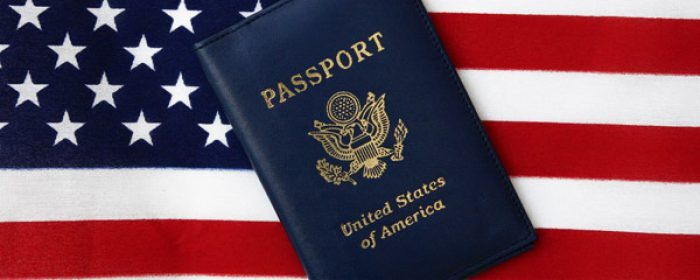
If you think your U.S. citizenship gives you the right to a U.S. passport, think again. The government has several ways to cancel or refuse to renew your passport.

Acquiring a passport in another country and then expatriating—giving up your U.S. citizenship and passport—is a very serious decision. If you change your mind and want to return "home" to the United States, you might not be able to.

It can... at least when it wants to ensure you're paying your taxes. Even though it goes against one of the hallmarks of the Bill of Rights, which reads:

If you don't trust U.S. banks to protect the monies you've deposited with them, you're hardly alone.

The United States is one of only two countries (the other is Eritrea, a military dictatorship) that taxes its citizens and long-term residents, no matter where they live. Even Americans who haven't lived in the United States in decades must pay tax on their worldwide income as if you never left. What's more, they must comply with complex reporting obligations, with violations subject to draconian civil and criminal penalties.

Whistleblower Edward Snowden needs to disappear if he is to avoid kidnapping, assassination, extradition, or deportation to the United States. If you're ever faced by a situation in which you need to disappear, right away, what would you do?
Sitting in a restaurant in Belize City last week, I was mesmerized by television reports describing NSA whistleblower Edward Snowden. Most of the press coverage of Snowden's leaks has dealt with the breathtaking scope of the U.S. government surveillance he revealed. But, I've been thinking about the reprisals that he's likely to face—and what options the United States has to force his return.

Do you have business or investment assets you're looking to protect from frivolous litigation? If you do, a Nevis limited liability company (NLLC) could be one if the most effective and least expensive ways to protect it.

It's not something you want to think about, but old taxes can come back to haunt you. This is especially true of returns you've never filed. The statute of limitations—that legal egg timer, normally set to three years—never starts to run on unreported activities. And there are cases now of the IRS going back decades, collecting big money—plus penalties and interest—on form-filing failures, accounting errors, and innocent mistakes by unwary people.

Official IRS statistics published in the Federal Register show that the number of U.S. citizens or long-term residents losing U.S. citizenship increased from 45 in the last quarter of 2012 to 679 in the first quarter of 2013. In 2012, according to IRS expatriation statistics, 932 Americans officially expatriated.

Why would someone want to become a resident or a citizen of Austria?

While you’d never know it reading recent headlines describing IRS targeting of conservative “Tea Party†type groups, a much larger IRS effort is underway to identify U.S. persons who have failed to disclose reportable and possibly taxable non-U.S. investments.

In the aftermath of the forced confiscation of bank accounts in Cyprus, the question that clients ask me most is, “could it happen here?†“Here†is wherever the client lives or invests, and could be the United States, Canada, Australia, New Zealand, Switzerland, or any other country. The answer is yes. This result stems from the nature of our modern financial system, built as it is on the flawed foundation of a poorly-understood concept called “fractional reserve banking.â€

(Mark here. I've known Paul Rosenberg, the CEO of virtual private network provider Cryptohippie, for many years. Paul recently re-launched his very informative "Freeman's Perspective" service, and I agreed to publish one of his articles. I hope you enjoy his writing.)

Now that the U.S. tax season is well under way, tax preparers all over the country are doling out appointments to those that live within our borders. But just what are the tax obligations and tax breaks, for U.S. citizens or green card holders living abroad?

Over the last few years, I’ve helped dozens of U.S. citizens and permanent residents (“green card†holders) give up their U.S. nationality or residence status. This is called Expatriation.